





Breaker

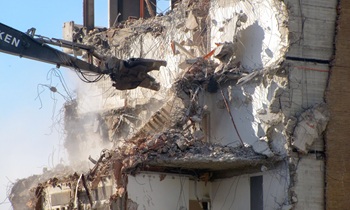
Breakers, also known as a hammers or hoe rams, are powerful percussion tools used for breaking up concrete or rock. They can be fitted to excavators and are powered by auxiliary hydraulic systems. They are similar in function and operation to hand-held pneumatic drills.
Breakers are typically used in application such as:
- The demolition of buildings.
- Breaking up pavements or roads.
- Trenching in rock.
- Breaking frozen ground
- Secondary reduction of blasted material.
There are two basic designs for mounted breakers – side-plate and boxed:
- Side-plate breakers have two slabs of steel secured to either side of the breaker mechanism. This arrangement usually leaves the breaker’s front and back open.
- Boxed breakers enclose the breaker mechanism in an outer casing, which acts as a shock-absorbing barrier. This has the advantage of providing more protection from debris. They also tend to be quieter, and there is a reduction in shock and vibration.
Breaker manufacturers tend to use an ‘Impact Energy Class’ rating to identify different breakers, which is loosely based on the breaker’s weight.
Breakers can also be categorised based on the piston-firing system that they use. The three basic types are:
The working tool should be sufficiently lubricated, and cleaned from abrasive dust that can get into the lower portion of the breaker. Some breaker models are fitted with automatic lubrication systems, or a sealing system can be installed if required.
[edit] Find out more
[edit] Related articles on Designing Buildings Wiki
Featured articles
Check out some of the best features and news from Designing Buildings as well as key stories from around the web.

Why construction can't afford to ignore the skills gap.
Building Safety Regulator, 19 August

Gill Kernick appointed Independent Chair of Residents’ Panel.
Connecting knowledge, technology and conservation
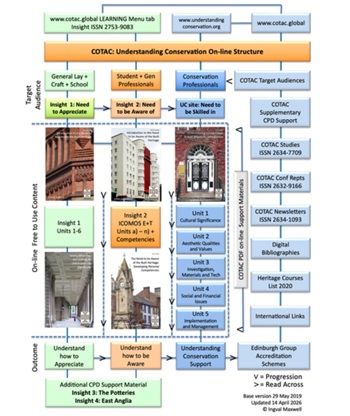
Building competence for the future of built heritage.
Building Regulations and Building Safety Act

CIOB publishes free advice for non-domestic clients.

Building Safety Newsletter from MHCLG.

An extraordinary record of steel engineering worldwide.

Households living near new pylons to save on bills.

ECA warns growth must not outpace grid capacity or skills.
The role of the client and decision making

CIOB response to built environment professions call for evidence.
Construction's sustainability reporting revolution
Tracking upfront embodied carbon with digital tools.
ECA welcomes procurement reforms

Public spending must back British jobs and skills.
Campaigning for Edinburgh: the Cockburn Association 1875-2049

The role of the civic voice in protecting character. Book review.
Comments
Awesome, but to improve service quality and operational efficiency you need an autolube system for a hydraulic hammer. Grease pump kit includes bolts to mount on the body, 1 hose only and grease pump with a cartridge. Easy to install, no need to make routine greasing procedure every 2 hours. Safe and secure https://buyaftermarketparts.com/articles/71_auto_grease_pumps_for_hydraulic_breakers